GET YOUR COPY OF THE MANIFESTO
Click on CONTACT US to register to receive a copy of the manifesto which features 6 original coloured plates, and an accompanying essay, study questions and a bibliography/reading guide. The Manifesto is free in PDF or there are limited printed copies for purchase.
OUR RESEARCH
This project began in 2024 when Dr. Rebecca Caines received a Connected Minds Seed Grant.
At the core of this project is a larger research mandate exploring knowledge transfer (between disciplines, between communities, between world views). The PI, Dr. Rebecca Caines, is seeking to build a larger knowledge-transfer network, of which this graphic novel is one part.
This work draws from diverse academic scholarship and conversations with our research team as well as with outside scholars and educators.
While we hope this work will appeal to many readers, we anticipate it being a creative teaching tool, and an audience of students and teachers has always been at the forefront of this project.
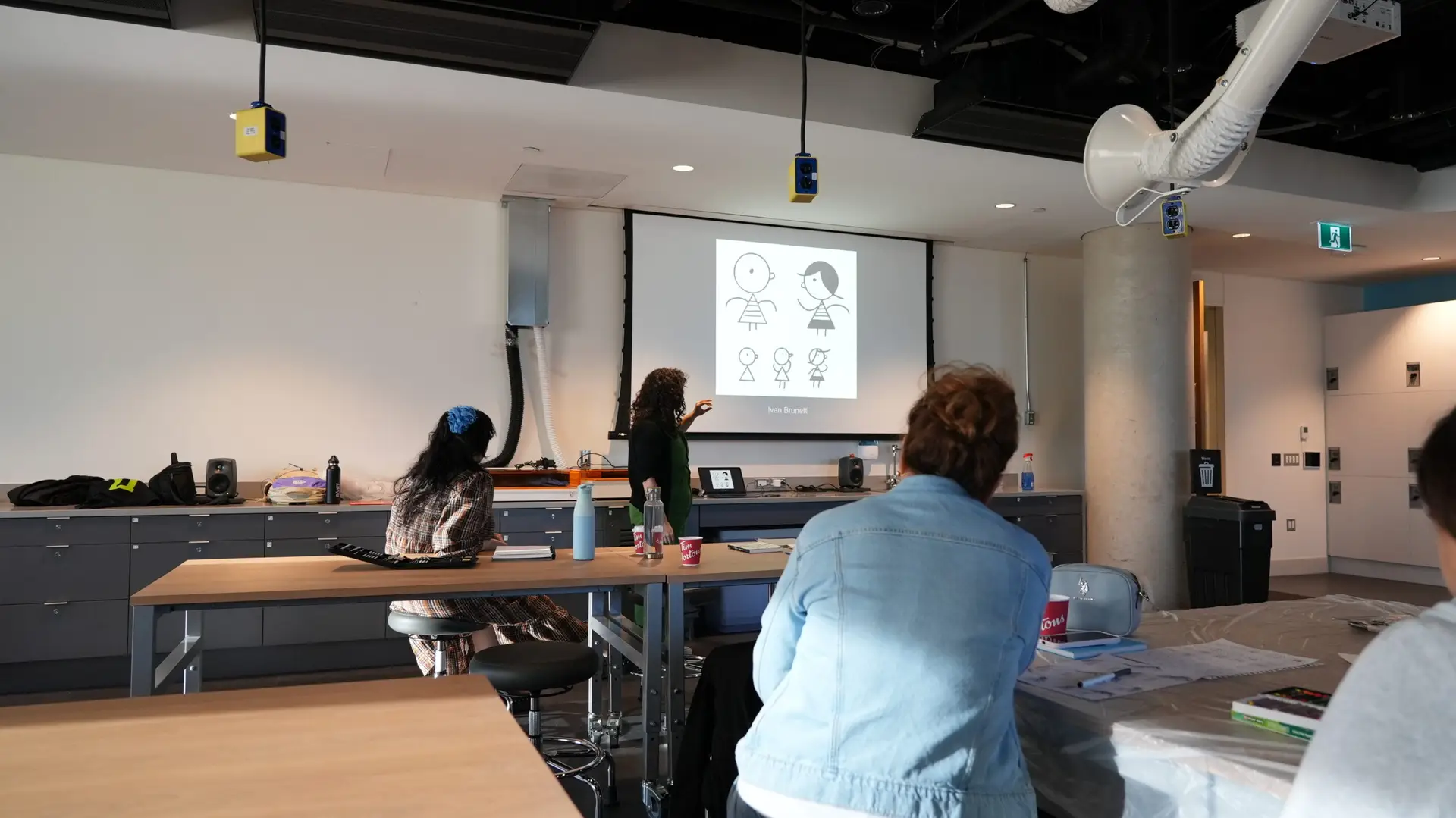
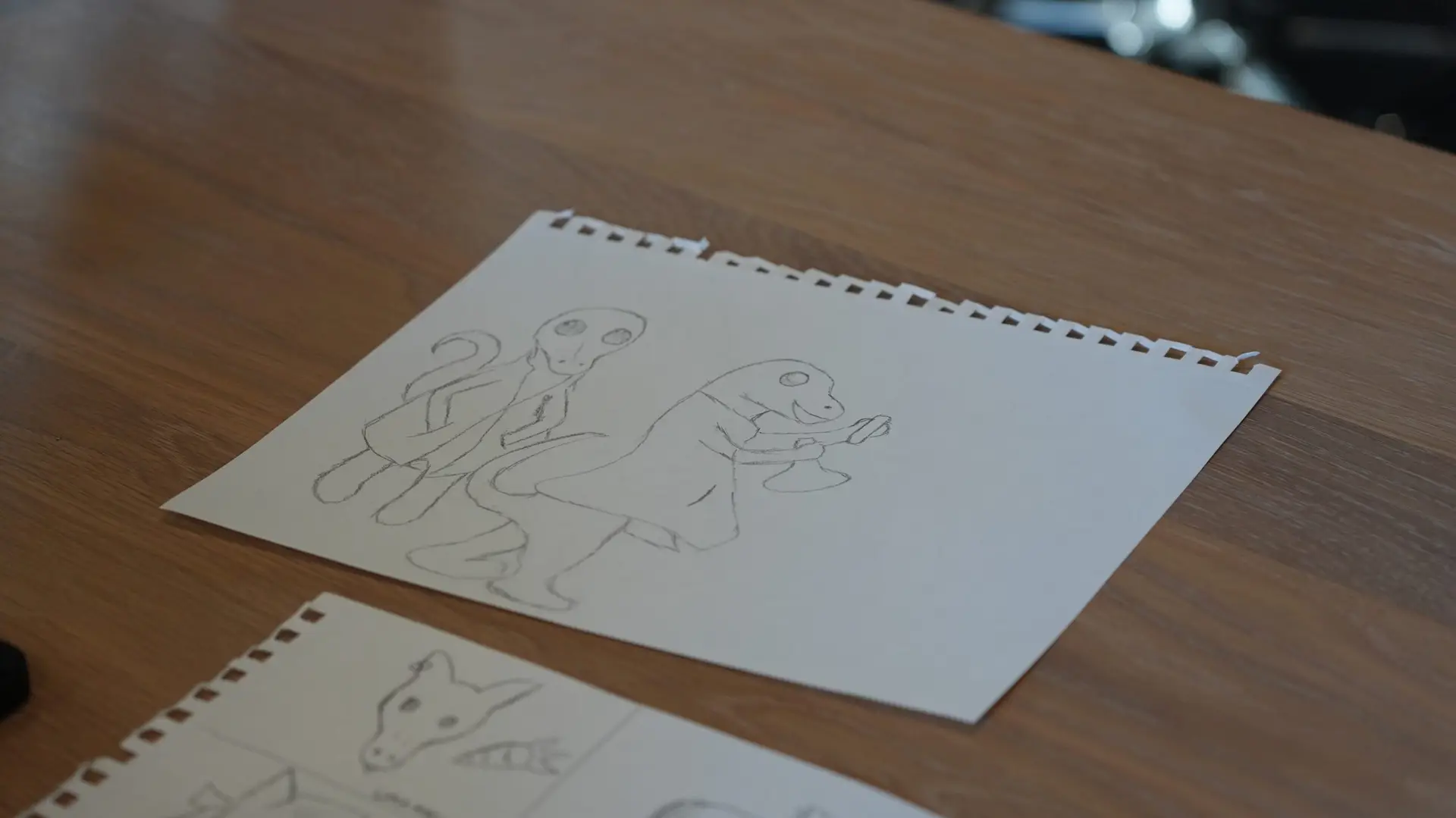
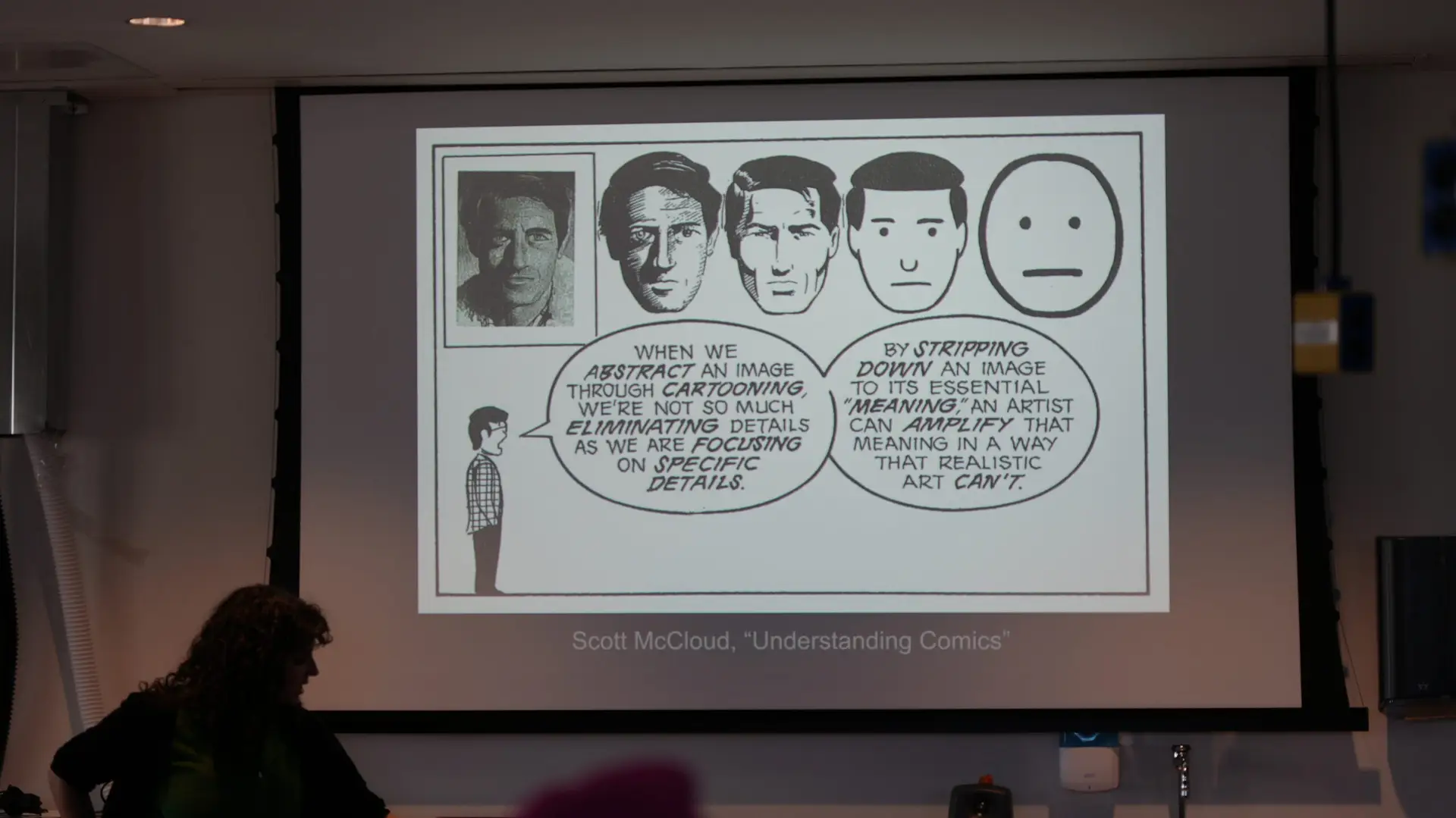
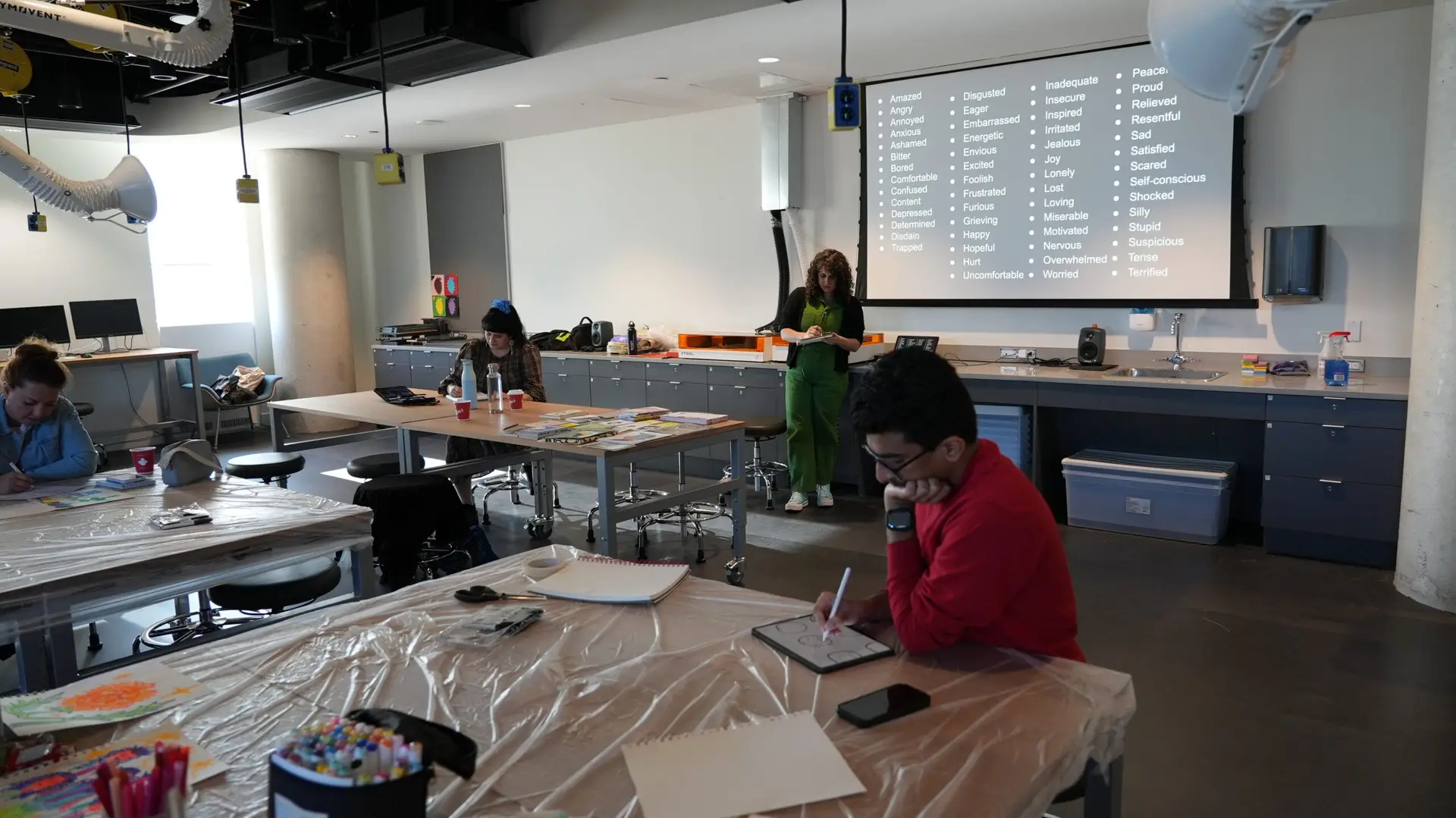
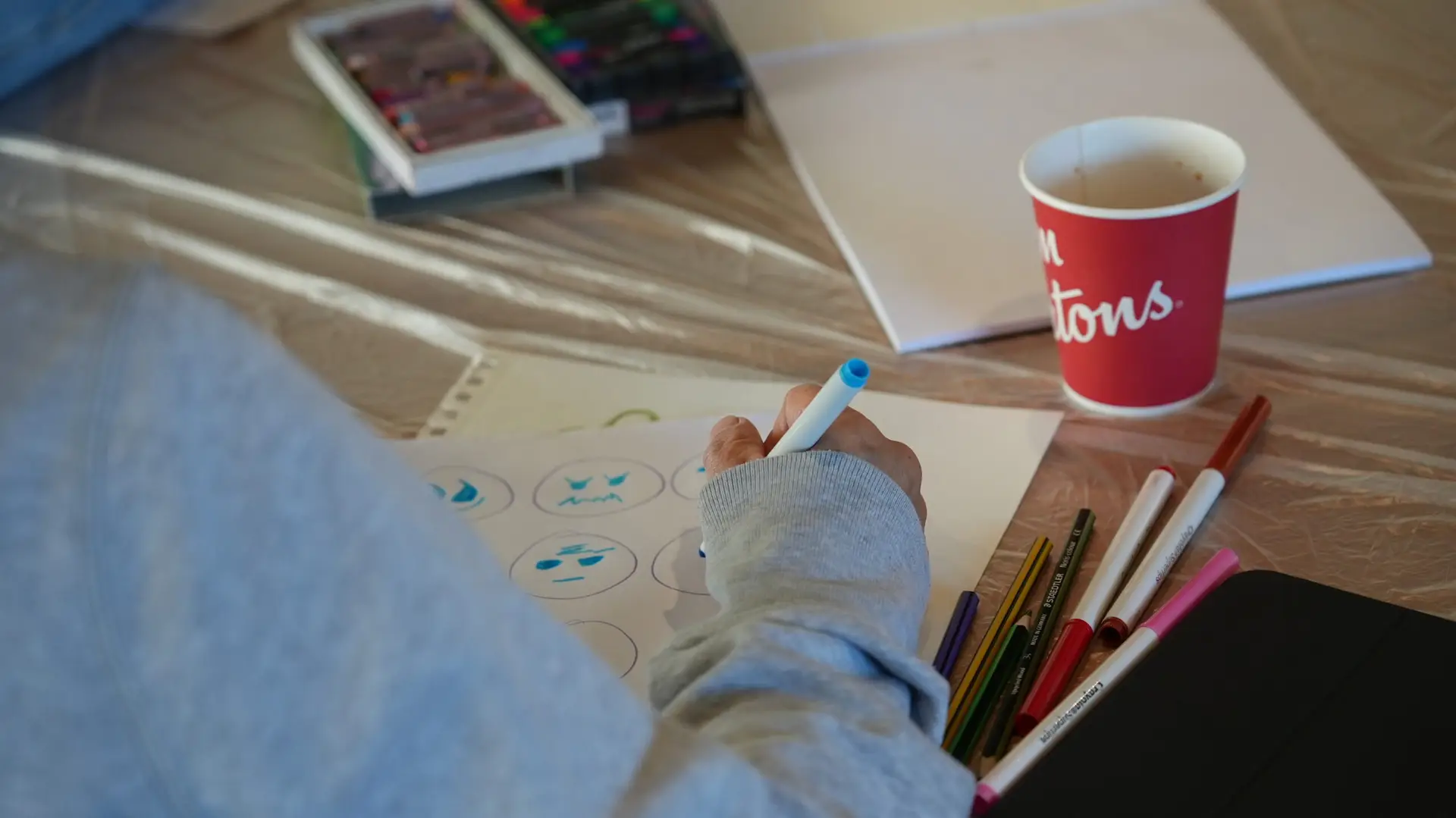
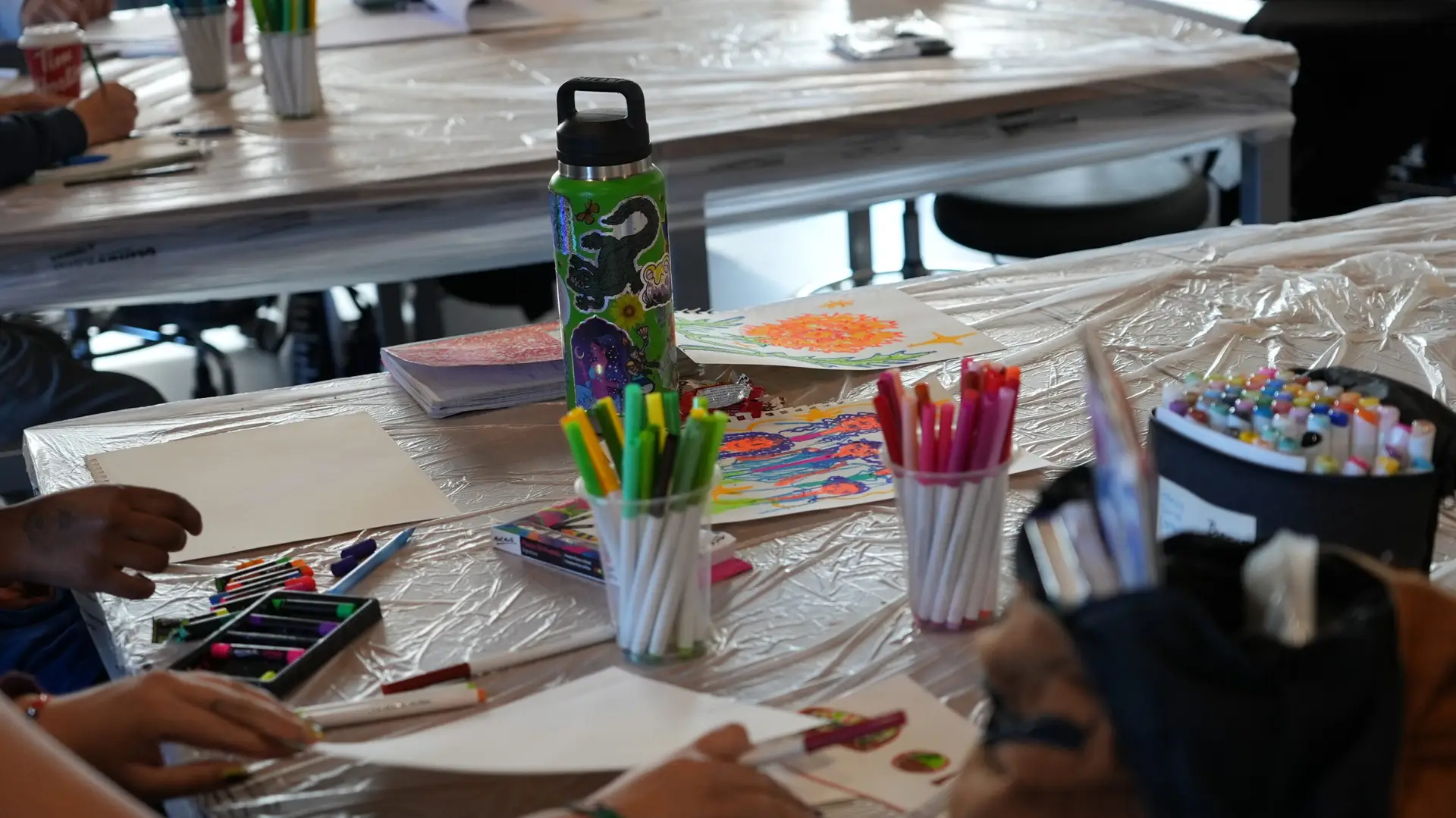
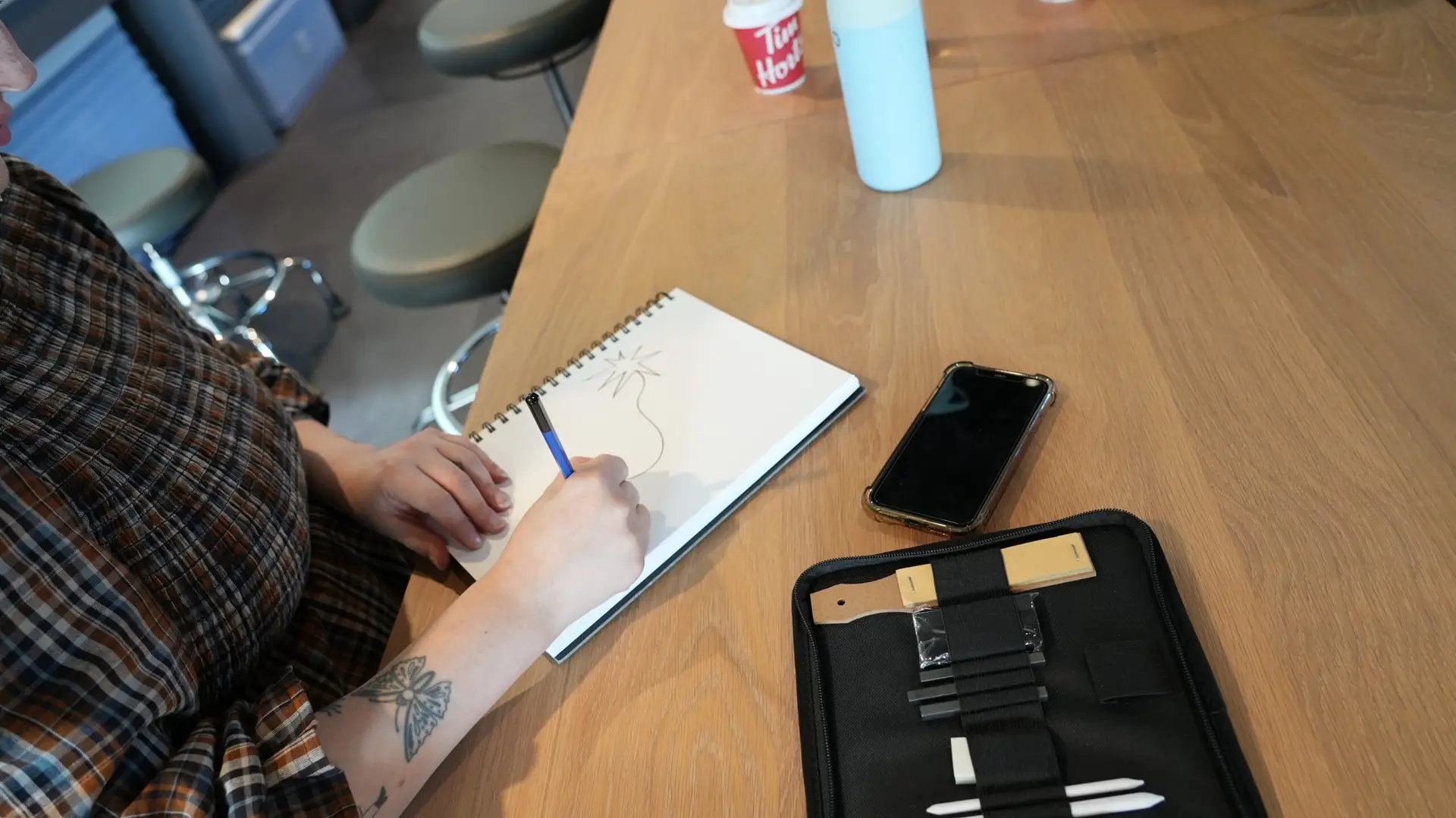
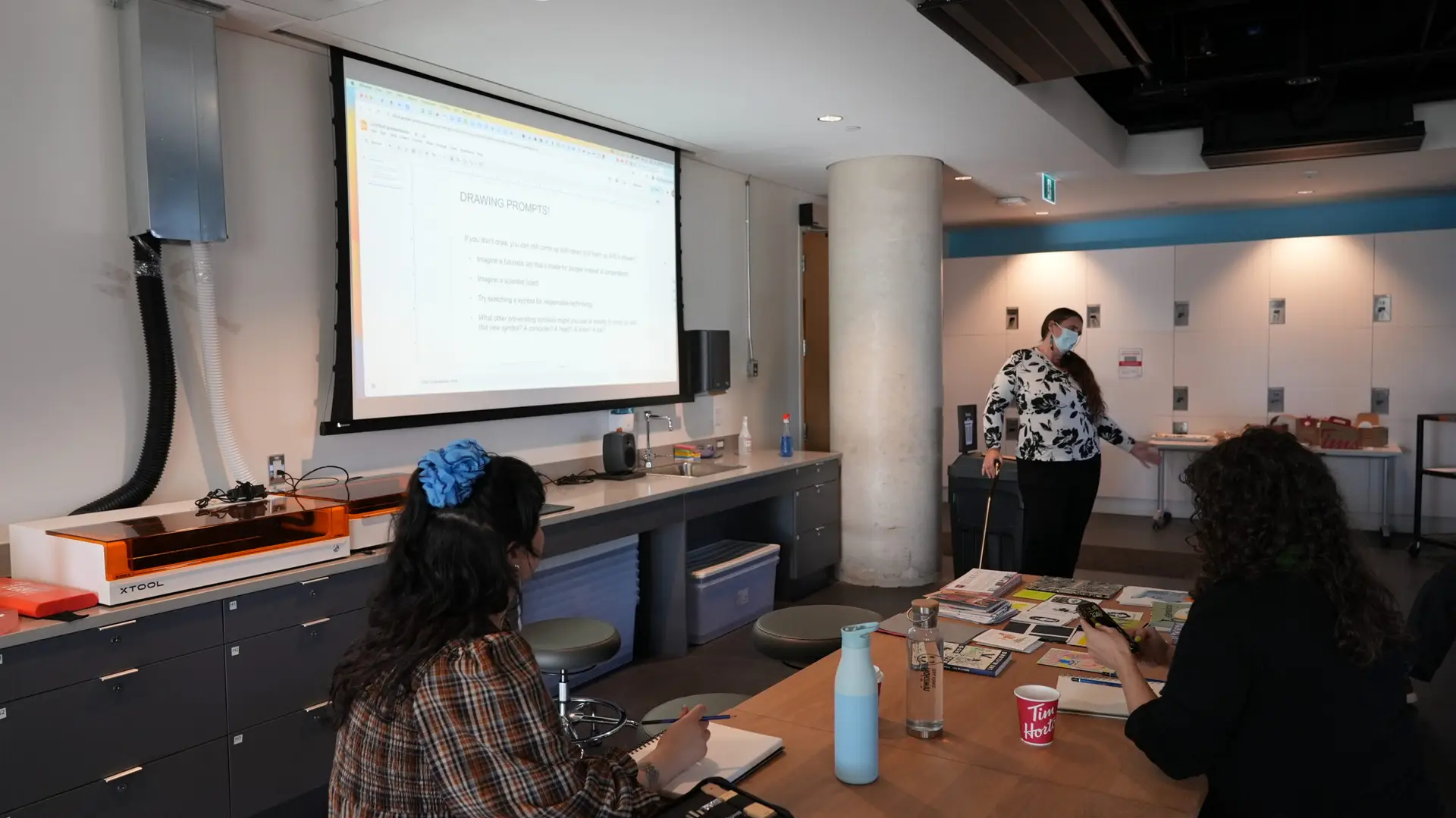
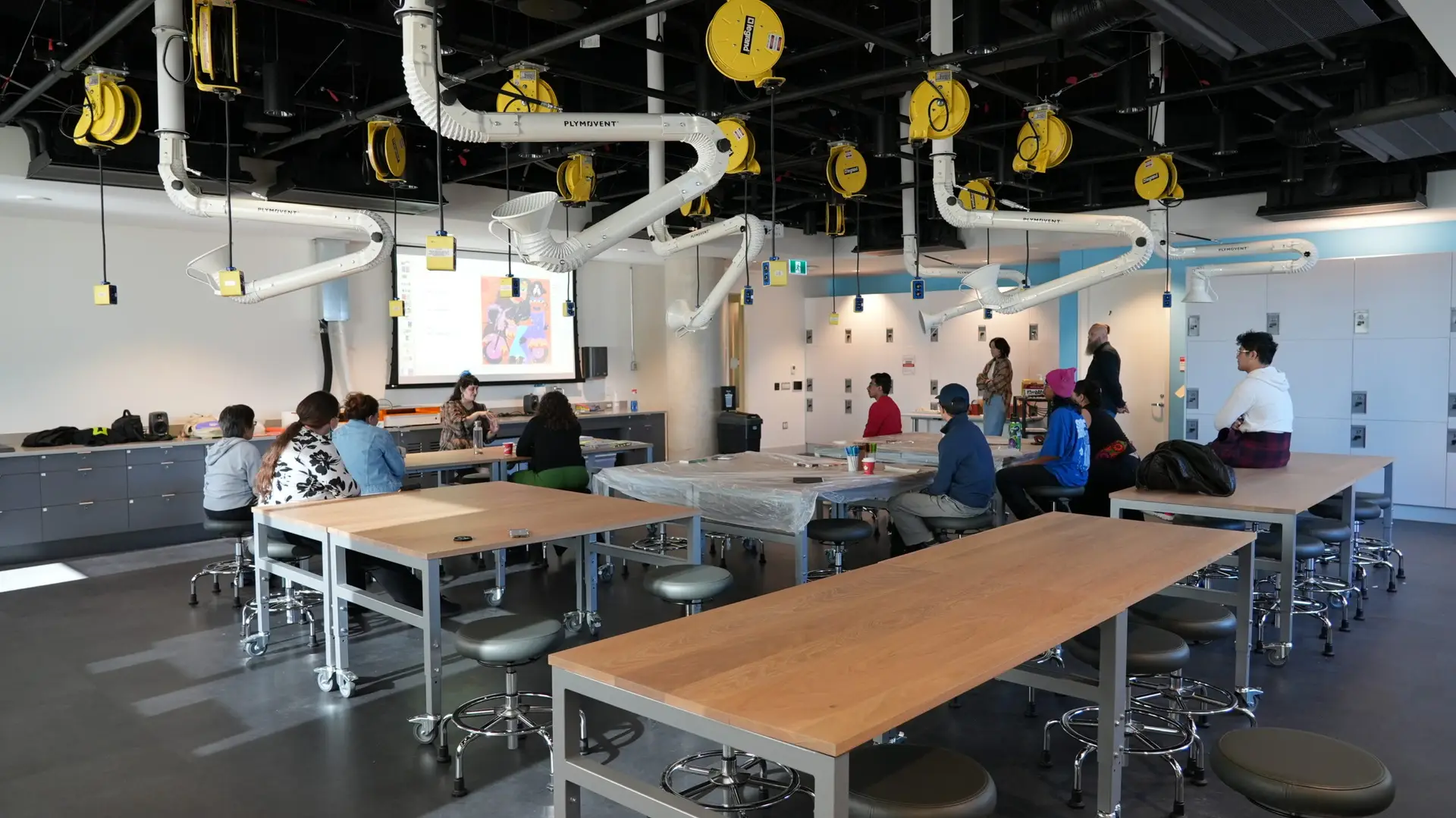
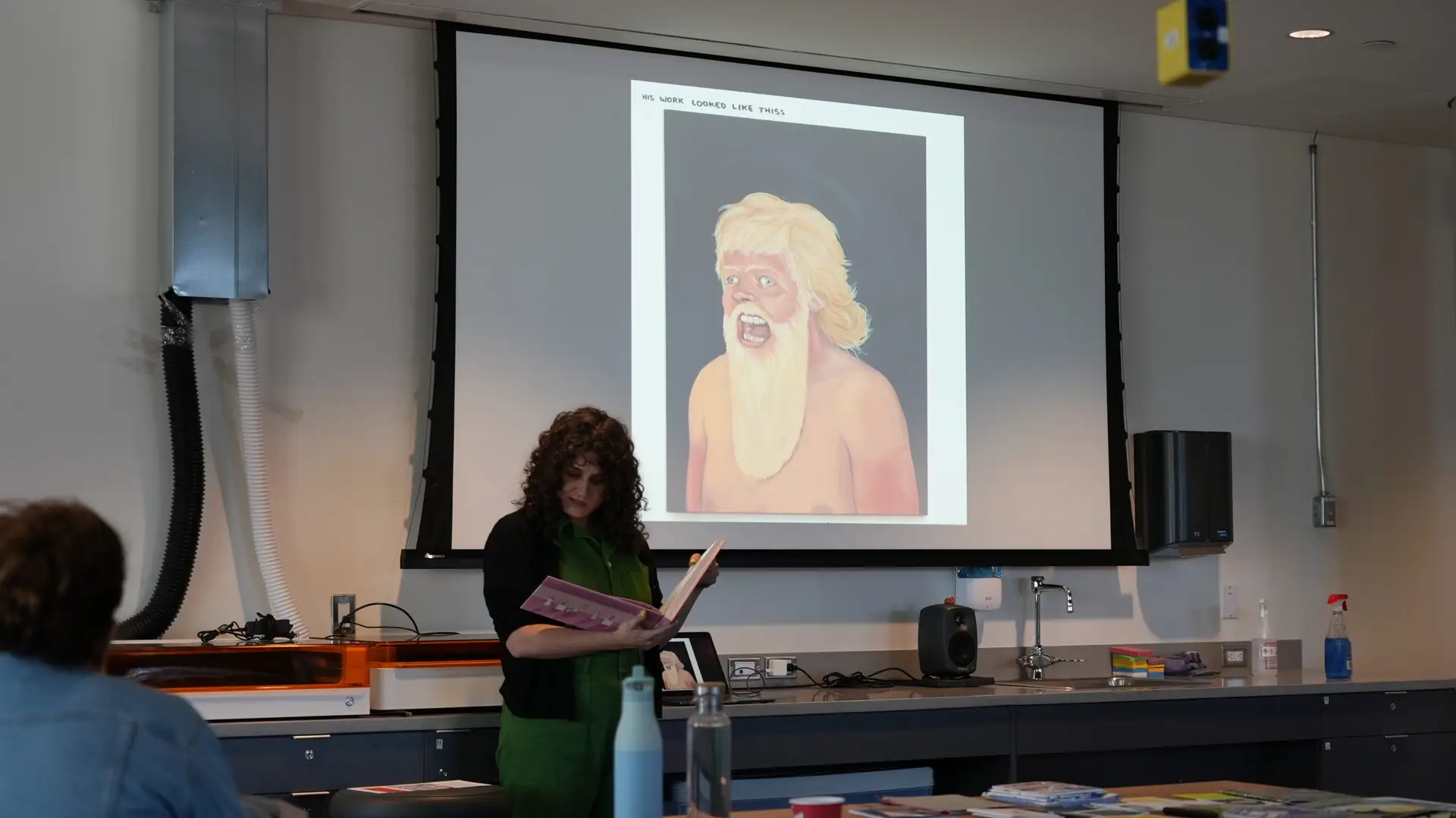
In October 2025, we invited artist Natalie King and guest artist Jessica Campbell to lead an ideas and drawing workshop at York University’s Markham Campus, in collaboration with the Markham Library’s Makerspace. Students were introduced to the world of LIZARD, and invited to imagine ethical technological futures using artistic means.
WHO WE ARE
LIZARD was created collaboratively by a team comprising PI Caines (Interdisciplinary artist and Program Coordinator of the Creative Technologies program at York University’s Markham Campus) alongside Dr. Gunnar Blohm (Professor of Computational Neuroscience at Queen’s University), Dr. Kai Zhuang (Professor of Engineering at York University), Nora Rosenthal (independent writer and filmmaker), and Natalie King (independent Anishinaabe artist, facilitator, and member of Timiskaming First Nation). Learn more about us here.
WHAT IS NEXT
Central to our research process was moving knowledge between our respective worlds, trying to make technological ideas legible to non-technical readers, and at the same time meaningfully integrating creative processes into scientific thinking, as well as foregrounding Indigenous knowledge in an ethical technological context.